Start with the production brief
A recirculating aquaculture system is a production facility whose water-treatment stages must work together. Before selecting equipment, define the species, life stage, intended harvest size, production schedule and available water source. Then document peak biomass and the expected feeding schedule. These inputs give designers a shared basis for discussing hydraulic capacity, oxygen supply and waste treatment. A proposal that lists only tank volume leaves major operating assumptions unresolved. Ask the supplier to state which production conditions each quoted component is intended to support and how future expansion would change the design.
Separate solids before they become a larger load
Feed introduces both nutrition and a future treatment load. Uneaten pellets and feces should move out of the culture area promptly, with the drainage layout and mechanical filter selected as one system. A settler can concentrate settleable material, while a drum screen captures a different fraction. Screen opening is a particle-size selection, not a promise that every solid will be removed. The waste pathway deserves its own drawing: backwash water, sludge collection, storage and final disposal all influence the practicality of the installation. Operators need access to the places where solids actually accumulate.
Give each treatment stage a defined role
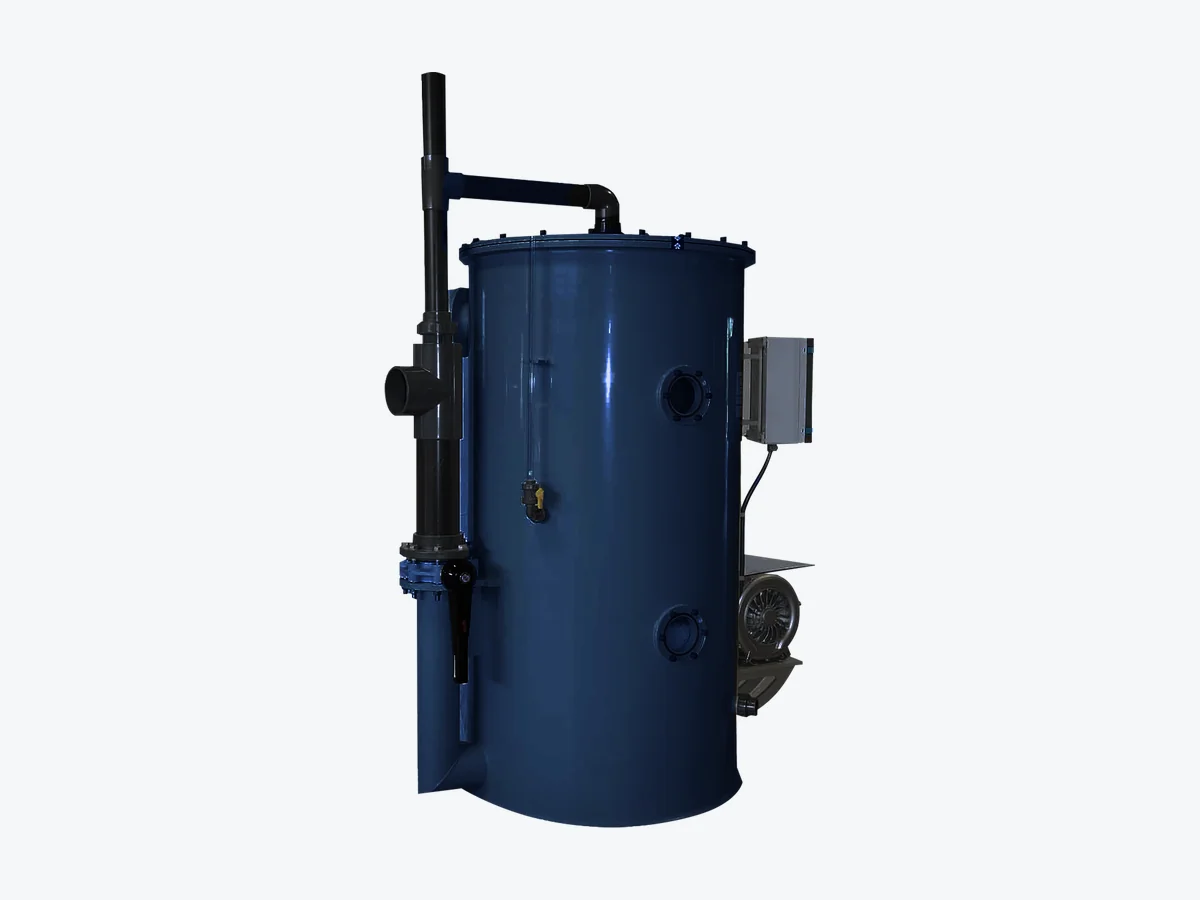
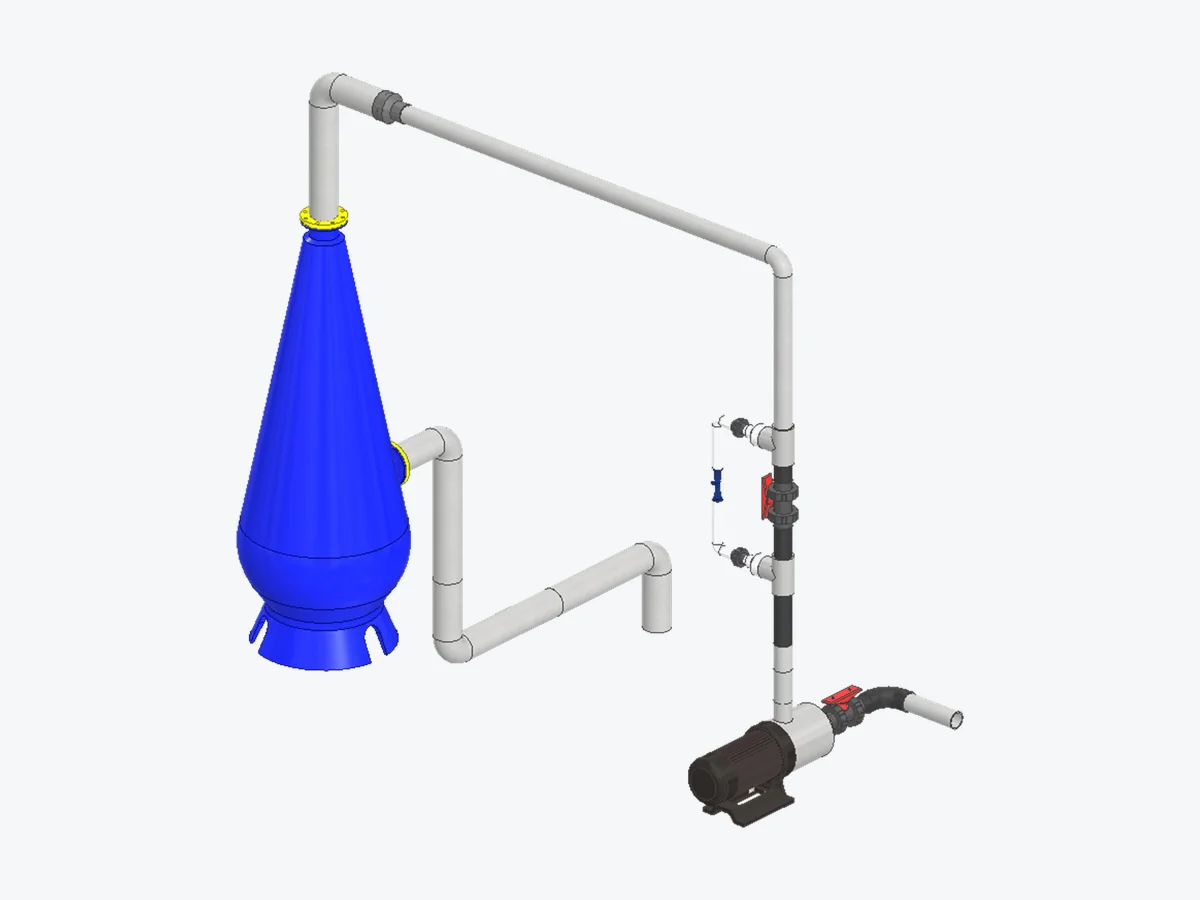
The usual treatment functions include mechanical separation, biological treatment, gas management and return-water conditioning. An aerobic biofilter converts ammonia through nitrite toward nitrate; it does not replace a solids filter. A degasser addresses carbon dioxide, while oxygenation supplies oxygen needed by stock. UV treatment addresses susceptible organisms passing through its treatment zone. Heat exchange or heat pumps manage thermal conditions. The exact sequence and the use of side streams depend on the project. A process diagram should show flow direction, bypasses, isolation valves and the water quality expected at each interface.
Close the water and energy balances
Recirculation reduces dependence on continuous new-water supply, but a real installation still has water movements to account for. Makeup, evaporation, backwash, sludge removal and any nitrate-control discharge belong in a water balance. Report makeup water separately from internal recirculation flow so that percentages remain meaningful. Apply the same discipline to power: circulation pumps, oxygen generation, aeration, temperature control and auxiliary devices each have an operating duty. Comparing systems on one pump’s nameplate or one heat-pump rating can miss the equipment that runs longest. Request projected annual consumption alongside peak electrical demand.
Design around the operator’s response
Instrumentation becomes useful when a reading leads to a clear action. Define the normal operating bands, alarm delays and response responsibilities for dissolved oxygen, temperature, pH, water level and essential equipment status. A high-level dashboard should help a person decide what to check first. Discuss how the facility behaves during a sensor fault, communications outage or loss of power. The operating plan should include a documented emergency oxygen arrangement, an accessible backup-power strategy and a way to verify that critical circulation has resumed. These decisions belong in the design discussion before stocking.
Commission a process, then increase the load
A hydraulic test can prove that water moves; it cannot prove that a new biofilter is ready for the intended feed load. Establish a commissioning plan covering water-tightness, flow measurements, control sequences, alarms, equipment access and biological startup. Increase production only as measured water quality supports it. Keep an operating log that connects feeding, biomass changes, water tests and maintenance events. Useful acceptance documents include a process diagram, equipment schedule, current manuals, spare-parts list and operator training record. The result is a facility that can be understood and managed through the whole production cycle.
Document the boundaries between supplier and site contractor as well. Civil works, electrical distribution, oxygen supply, drainage and operational staffing should each have an owner so that the completed installation can be commissioned as a coherent facility.
Sources & further reading
- Commercial Recirculating Aquaculture Systems: Design Basics and Economic Realities
- Fish Health Management Considerations in Recirculating Aquaculture Systems, Part 1
- SRAC 453: Recirculating Aquaculture Tank Production Systems, A Review of Component Options
- Bregnballe, 2022. A guide to recirculation aquaculture, 3rd edition
- Fish Health Management Considerations in Recirculating Aquaculture Systems, Part 3
- 山东纳鑫新能源有限公司
- 循环水养殖系统(RAS)技术培训