Define the duty of each device
Oxygenation and UV disinfection address different operating needs. Oxygen equipment transfers oxygen into water; UV equipment exposes passing water to radiation intended to inactivate susceptible microorganisms. One cannot stand in for the other. Both also depend on conditions elsewhere in the installation. In procurement, give each device its own duty statement, flow basis, controls and acceptance criteria. Then examine how the two connect to the rest of the circuit. A shared process drawing is a useful place to identify isolation valves, sampling points, bypasses and the instruments needed to understand actual operation.
Understand what happens inside an oxygen cone
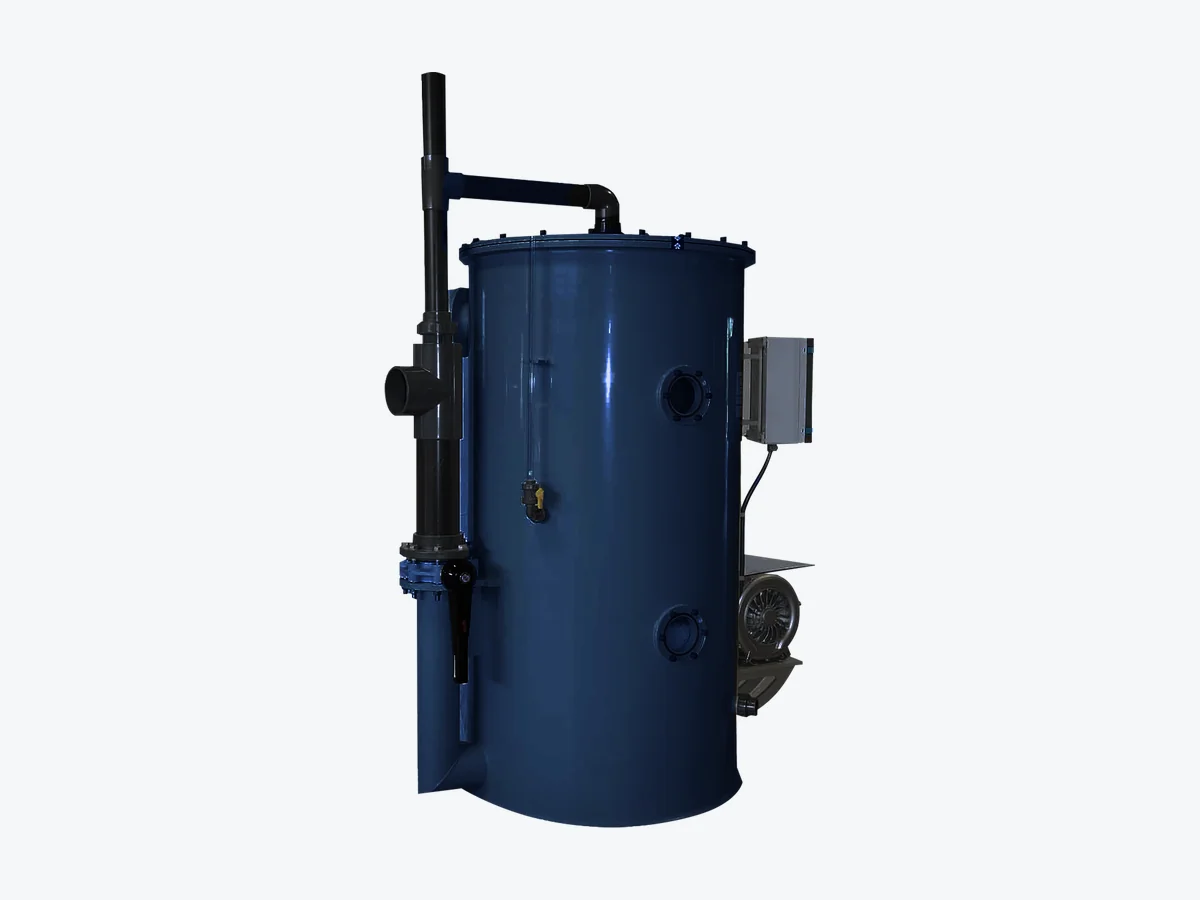
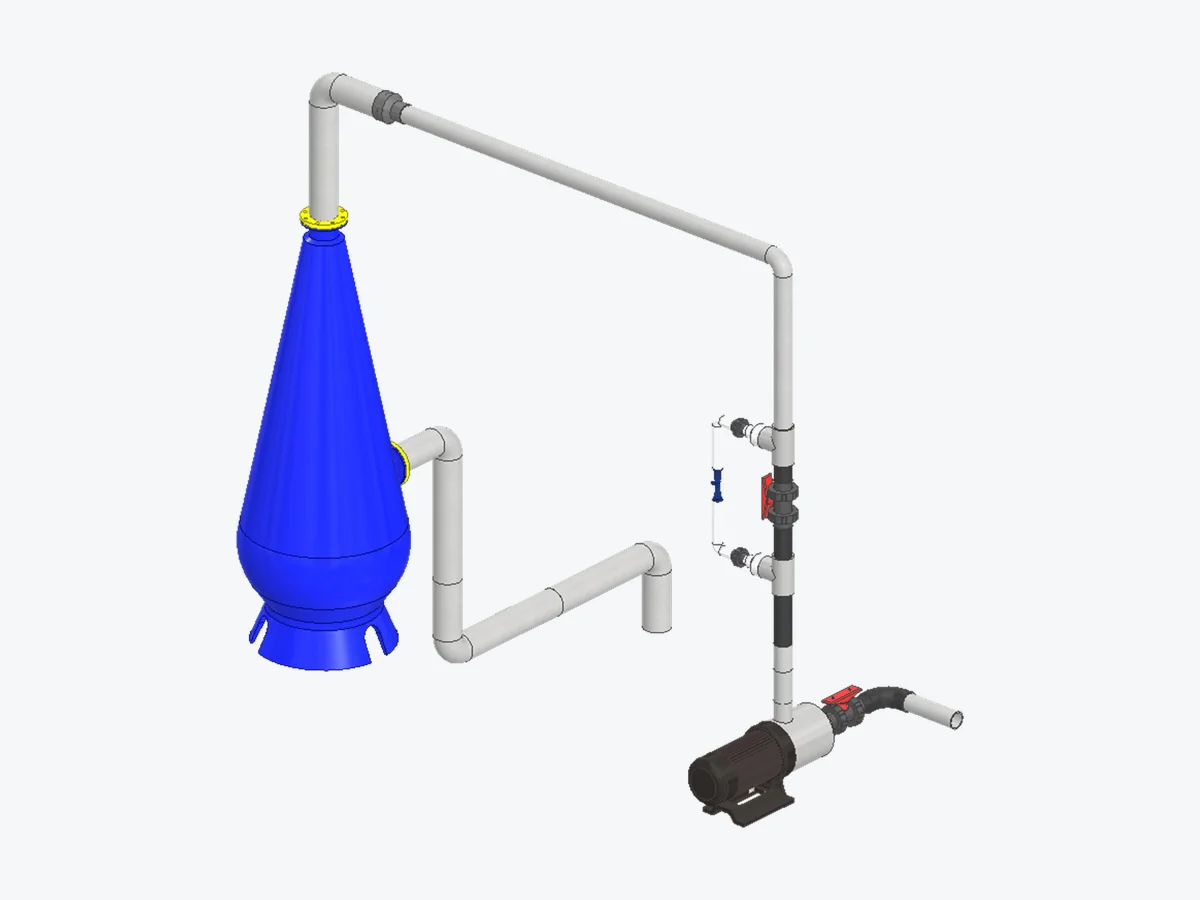
An oxygen cone is a gas-water contactor. Water and oxygen enter a shaped vessel, where the flow pattern and pressure support contact and dissolution before enriched water returns to the system. The supplied equipment literature describes an external circulation pump and injector, and blending of enriched water with the remaining culture-water flow. That explains the concept, but it does not establish a universal oxygen-transfer rate. Ask for performance at the proposed water flow, temperature, salinity, inlet dissolved oxygen, oxygen supply and operating pressure. Clarify the electrical demand required to achieve the stated duty.
Control oxygen where it matters to the stock
A high dissolved-oxygen value at a contactor outlet is not the same as adequate oxygen throughout every culture tank. Review the mixing arrangement, distribution pipework, tank flow and oxygen demand as an integrated system. Use measurements at relevant locations to verify what the animals experience. The control design should explain the response to low oxygen, a failed probe, interruption of oxygen supply and loss of circulation. Discuss the available emergency reserve and how it reaches the tanks. Test these sequences during commissioning with the operator present, and record the expected indications and response steps.
Select UV by delivered treatment conditions
UV performance depends on the target organism, exposure conditions, flow and water quality. Lamp electrical wattage alone does not define an effective disinfection dose. Water clarity and transmission affect how much radiation reaches an organism, while flow and reactor hydraulics affect exposure. Ask a supplier to state the target and the basis used to select the reactor. Keep design water quality and maximum treatment flow together with that selection. When reviewing a percentage-reduction claim, request the test method and conditions behind it rather than treating a broad brochure statement as a guarantee for all pathogens.
Make cleaning and verification part of the design
Particles can shield organisms, and deposits on sleeves can reduce UV transmission. Mechanical treatment and regular inspection therefore belong in the operating plan. Access must allow safe lamp and sleeve servicing, with the required spare parts available. Request the inspection interval, cleaning procedure, replacement guidance and any intensity or status monitoring supplied with the unit. A flow bypass may keep circulation running during maintenance, but the operating procedure should explicitly describe the treatment status while it is in use. Keep maintenance records so an unexpected water-quality result can be compared with actual equipment condition.
Verify the interfaces before stocking
Commissioning should verify actual flow, oxygen response, alarms, interlocks and maintenance isolation. For oxygen equipment, agree how gas use and achieved water conditions will be measured. For UV, verify that the installed arrangement matches the selection basis and that the operator understands any monitoring limits. Confirm which parts of the water circuit receive treatment and which do not. Neither device makes the entire farm sterile or replaces biosecurity, cleaning and stock management. A clear handover turns two pieces of hardware into understandable treatment functions, supported by records that help the operating team recognize and investigate changing conditions.
Record both the normal sequence and the exceptions, including planned service outages. Clear records help operators distinguish a treatment interruption from a change in culture-water demand.
Sources & further reading
- 山东纳鑫新能源有限公司
- SHANDONG NASIR NEW ENERGY CO.,LTD
- SRAC 453: Recirculating Aquaculture Tank Production Systems, A Review of Component Options
- Bregnballe, 2022. A guide to recirculation aquaculture, 3rd edition
- 循环水养殖系统(RAS)技术培训
- Fish Health Management Considerations in Recirculating Aquaculture Systems, Part 2: Pathogens
- Farming freshwater prawns, hatchery water treatment
- Fish Health Management Considerations in Recirculating Aquaculture Systems, Part 1