Define the thermal duty before choosing a machine
Aquaculture temperature control begins with the water and the site. Record incoming-water temperature, target culture temperature, makeup flow, tank and building heat losses, seasonal weather and the required recovery time after a disturbance. Heating a new batch and holding a stable production system are different duties. Cooling may also govern equipment selection in a warm climate. A clear design brief should describe the most demanding credible combination of these conditions. The supplier can then explain which machine or modular arrangement meets the duty and which assumptions would require a revised selection.
Read every capacity beside its rating condition
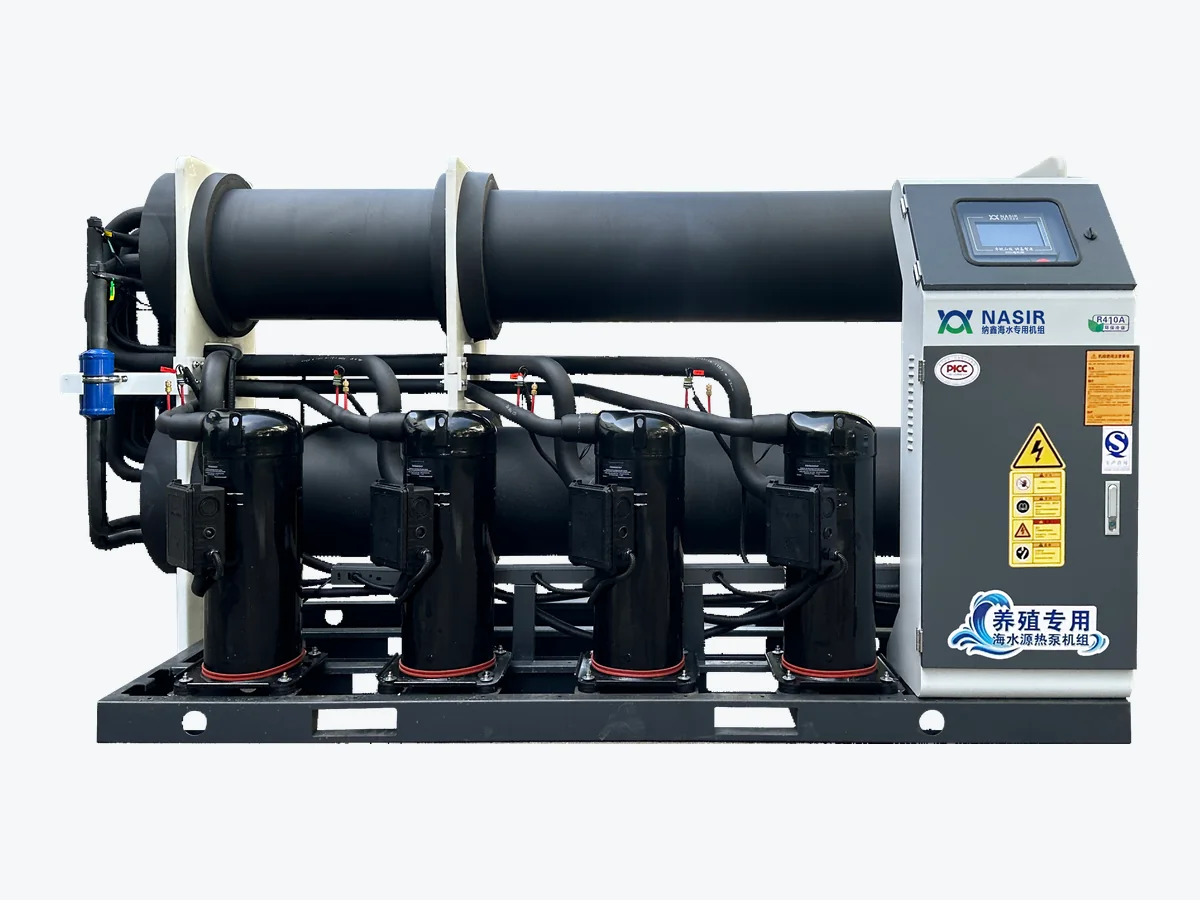
A heat-pump capacity number is meaningful only with its source and delivery conditions. For example, the supplied NXR scroll-series brochure lists 92 kW heating capacity and 18.7 kW heating input for NXR-80HS. The accompanying heating condition specifies 45°C hot-water outlet and 15°C cold-water inlet, together with defined flow relationships. These figures describe that published condition; they are not a prediction for every aquaculture installation. Keep source temperature, outlet temperature, flow and fouling assumptions with a comparison table. Also request capacity and input at the temperatures the project will actually encounter.
Distinguish recovered heat from upgraded heat
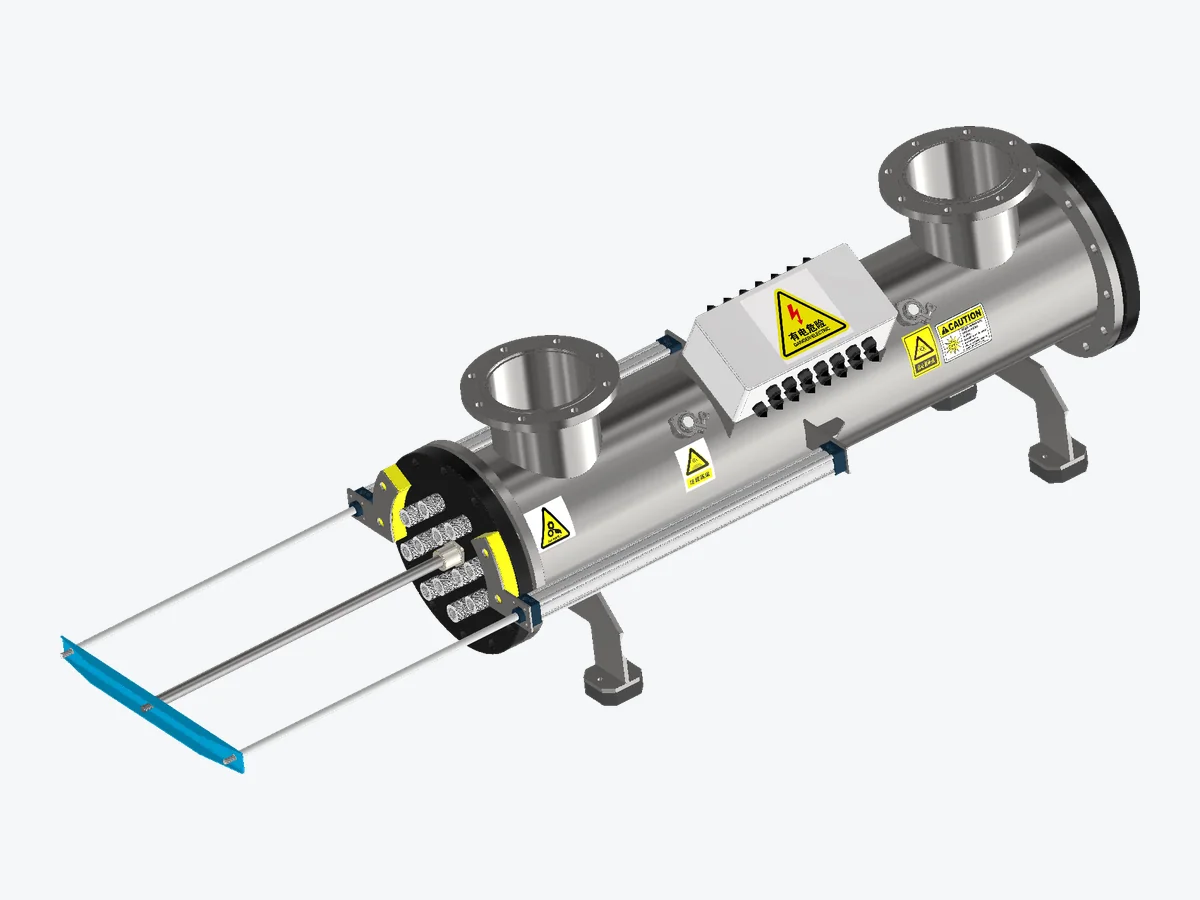
A liquid-to-liquid heat exchanger transfers heat from a warmer stream to a cooler one. A compressor-driven heat pump uses input energy to move heat to a higher temperature level. Both can be valuable within one installation, but they are different pieces of equipment with different selection questions. For direct recovery, examine simultaneous flow, available temperature difference, fouling and cleanability. For the heat pump, examine source and delivery temperatures and the required output. Describing a complete recovery skid as requiring no energy overlooks circulation and controls even when the heat-transfer surface itself has no drive motor.
Keep efficiency calculations within a clear boundary
Heating coefficient of performance compares useful heating output with the stated power input in the same units. A brochure calculation based on machine input and a project calculation including source pumps, distribution pumps and auxiliaries answer different questions. State the boundary before comparing them. For an operating-cost study, use local tariffs, expected running hours and seasonal loads rather than a single electricity price from an old example. Present assumptions that another engineer can check. Metered heat and electrical energy collected over representative operation provide a stronger basis for evaluating the installed system than a promotional percentage.
Specify corrosion control and maintenance access
Seawater makes material selection and service access central to reliability. The supplied literature describes titanium tubes, PP components and removable heat-exchanger arrangements. Treat these as construction features that should be confirmed against the ordered configuration. Request materials for each wetted component, compatible seals, water-quality limits and an approved cleaning method. Leave room to remove covers, tubes or other service parts as intended. Claims such as corrosion-proof, never scaling or maintenance-free are less useful than a clear inspection and cleaning plan with available replacement parts and documented operating limits.
Evaluate winter capacity and the complete installation
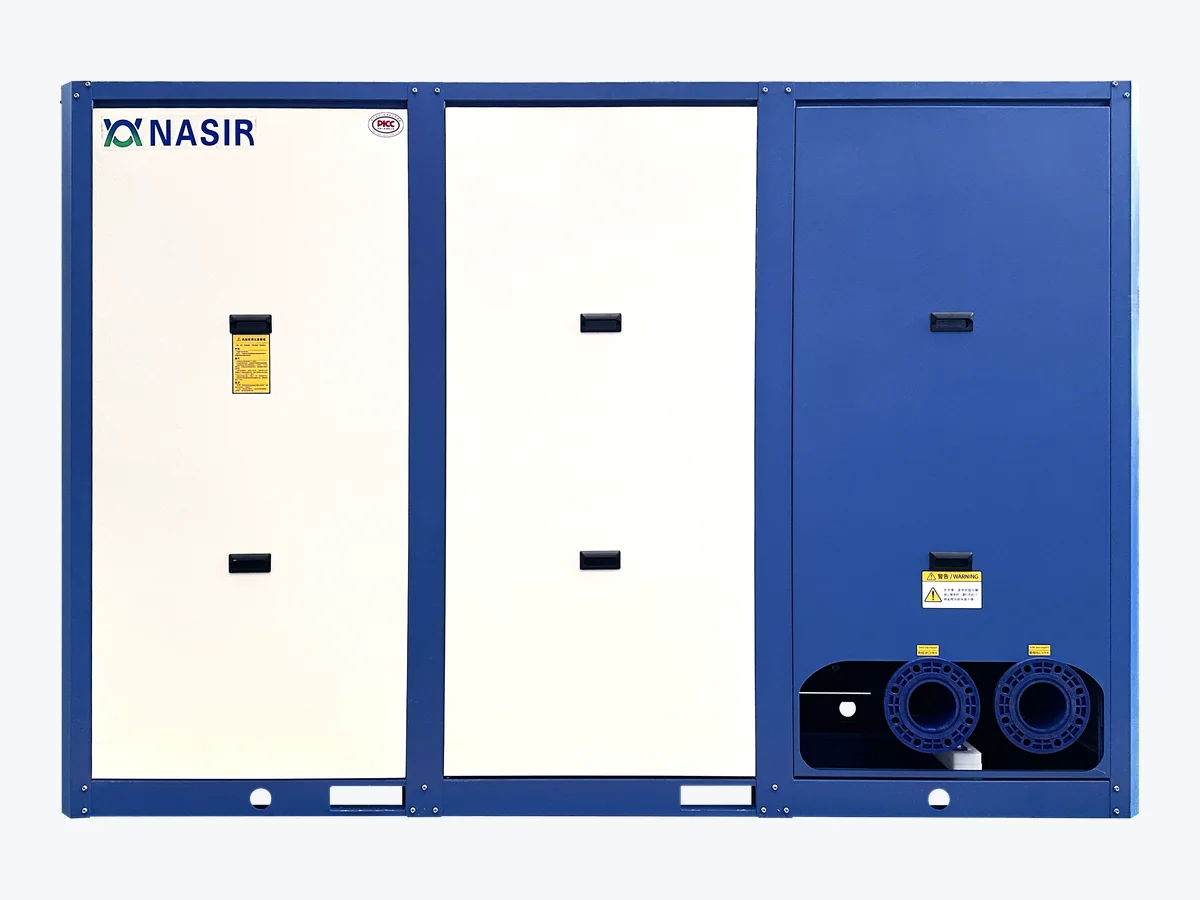
Air-source machines must be selected using relevant winter performance, not merely a low-temperature operating limit. The supplied NXFR-40C table reports 38 kW at outdoor 7°C and water outlet 45°C, and 20 kW at outdoor -20°C and outlet 41°C. Those are different conditions, and the reduction matters when reviewing winter duty. Ask how defrost, backup capacity, redundancy and flow protection are addressed. Close procurement with the approved model sheet, electrical requirements, hydraulic schematic and commissioning responsibilities. Confirming these items creates a practical basis for stable water-temperature control and later performance review.
For seawater installations, also discuss intake availability and discharge requirements at the design stage. The thermal source is part of the project infrastructure, and its seasonal condition should appear in the approved selection assumptions.
Sources & further reading
- Industrial Heat Pumps for Steam and Fuel Savings
- Energy Conservation Program: Test Procedure for Water-Source Heat Pumps
- 养殖专用海水源热泵机组简介
- 养殖专用海水源定频热泵机组简介
- Special sea water source heat pump unit for breeding
- 山东纳鑫新能源有限公司