Define the load
Provide maximum and minimum flow, water chemistry, treatment objective and peak operating load.
Recirculating Aquaculture Equipment
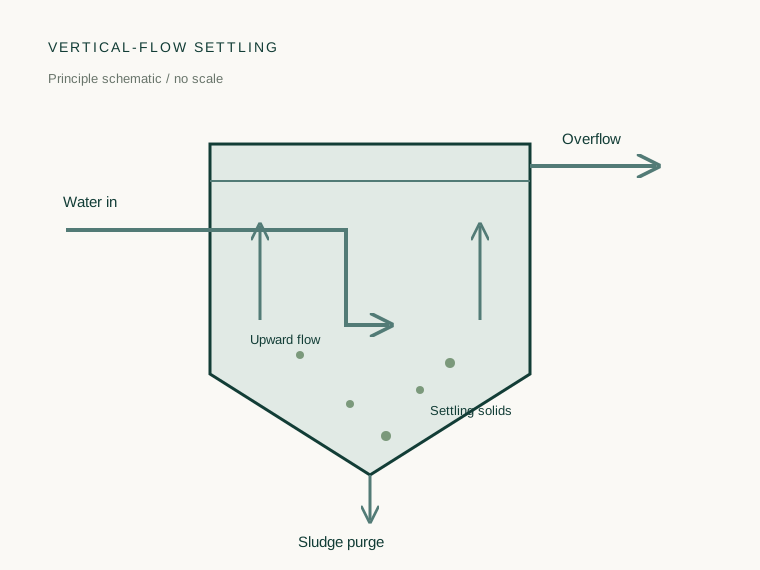
Use an upward-flow settling stage where the water and solids characteristics support gravity separation.
 View image
 Technical information
Figures below are transcribed from the stated brochure, where available. Confirm the selected model, conditions and scope in the final technical offer.
| Item | Documented information |
|---|---|
| Configuration status | Detailed model schedule to be confirmed |
| Image note | English principle schematic based on RAS training p. 6; not a product photograph |
Source: 循环水养殖系统(RAS)技术培训(1).pdf p. 6. Brochure information; final scope is agreed in the technical offer.
Equipment selection guide
Provide maximum and minimum flow, water chemistry, treatment objective and peak operating load.
Agree piping or service connections, electrical supply, control interfaces, installation access and the routine cleaning method.
Specify the included equipment, optional configurations, commissioning tasks, acceptance conditions and documentation required.
Operating principle
In a vertical-flow settling stage, upward hydraulic velocity must be low enough for target particles to settle against it. The sediment collector is drained separately.
Technical approach
Equipment selection guide
Recirculating Aquaculture Equipment
Confirm the flow assigned to the settler, the solids characteristics, vessel surface area and sludge-removal schedule. Training examples of rise velocity and removal are not guaranteed equipment ratings.
The training explicitly distinguishes large settleable solids from finer suspended particles and states that the settler does not replace fine filtration.
The training describes separate drainage streams. The project design determines which concentrated stream is routed to settling.
Continue exploring

Recirculating Aquaculture Equipment
Remove suspended solids early in the water loop, before they add load to downstream treatment.
Recirculating Aquaculture Equipment
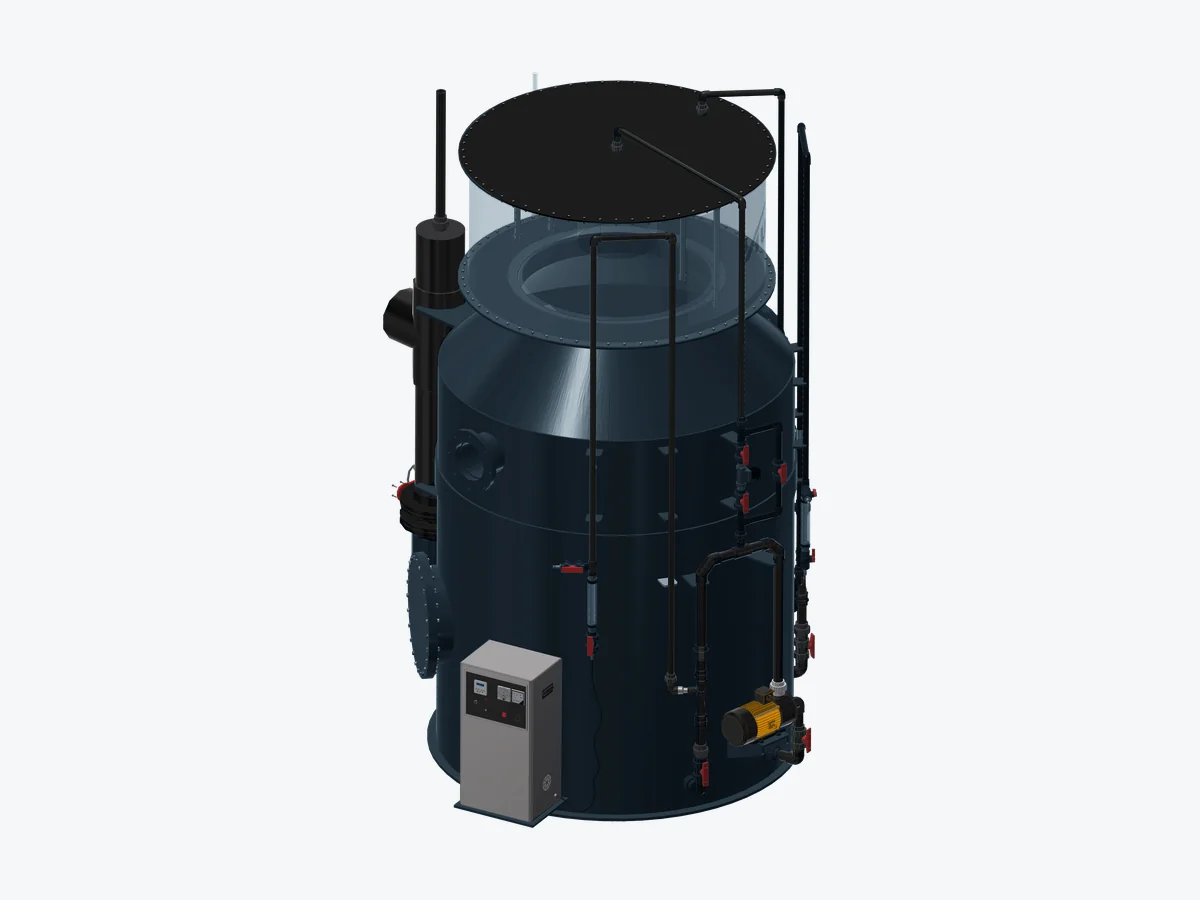
Separate foam-associated organic matter from seawater in hatcheries, aquariums and recirculating aquaculture.
Recirculating Aquaculture Equipment
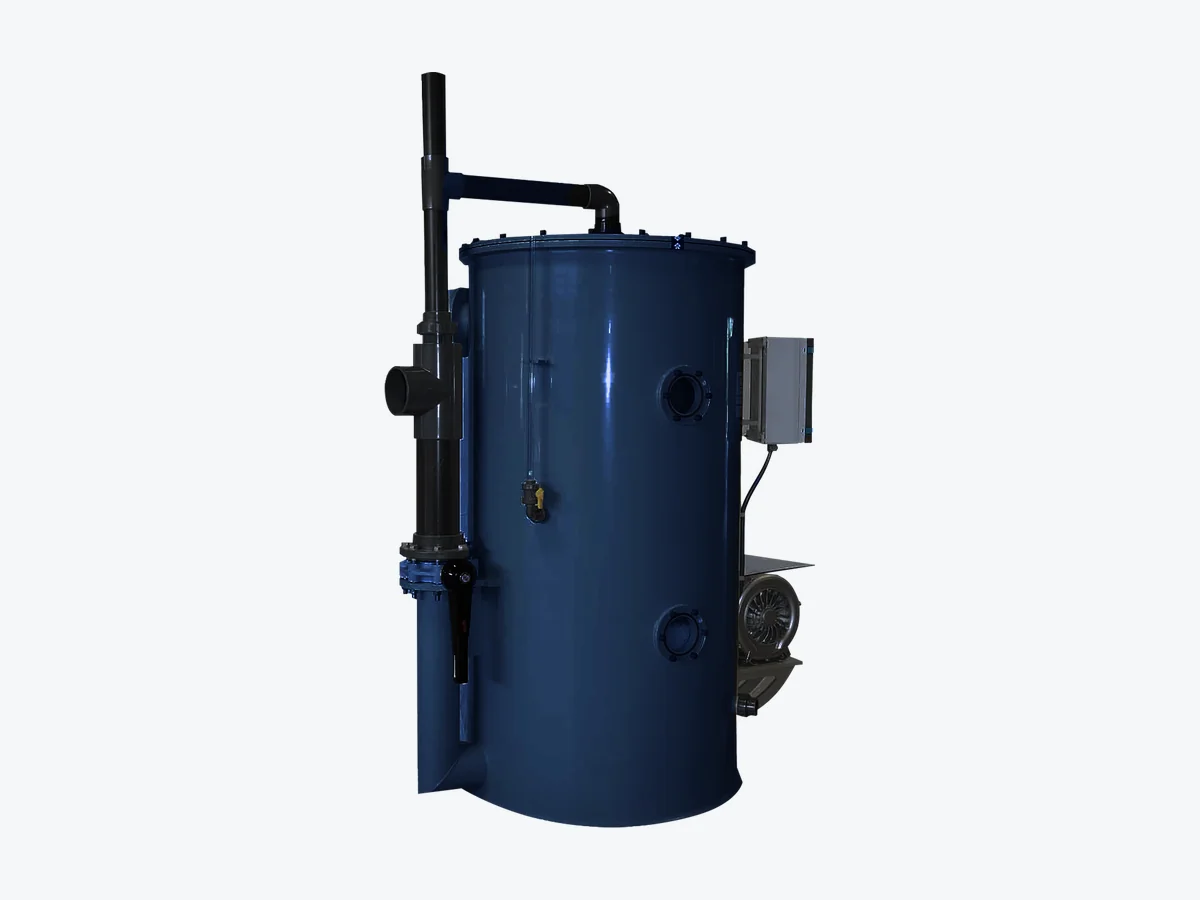
Provide a protected biofilm surface for biological treatment within a properly sized aquaculture water loop.
Start a technical conversation
Share your water flow, temperature duty or cabin requirements so the selected configuration can be discussed.